
出租车司机
2026NBA城市挑战赛成都开幕,传奇球星德隆·威廉姆斯现场助阵_我的网站

一 |
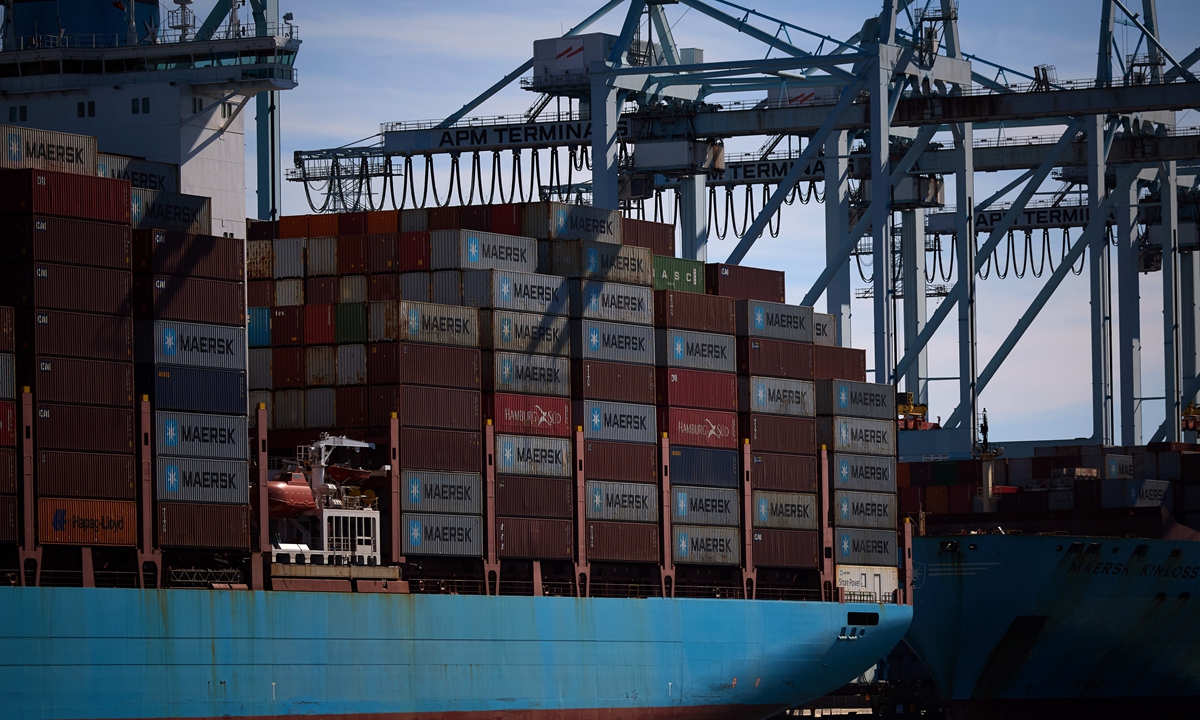
When even major US allies and trading partners are swept into Washington's alleged China-linked transshipment network, is the US still cracking down on its so-called illegal tariff evasion, or is it raising its "small yard, high fence" higher and tighten it further by wielding its tariff stick and extending tariff controls across normal global supply chains?
The White House on Thursday released a report identifying roughly 40 economies as participants in what it calls a "Shadow Transshipment Network", alleging that Chinese goods are being routed through third countries to evade higher US tariffs. The list stretches across Asia, Europe and the Americas and includes some of Washington's closest allies and largest trading partners.
Chinese experts said the report is partly aimed at defending Washington's tariff policy by shifting responsibility for its weakened impact onto other economies, while also pressuring them to follow US trade and origin rules. In effect, the US is trying to extend its unilateral trade restrictions beyond its own borders and deeper into global supply chains, they said.
Build 'higher fence'
The 25-page report claims that US import sourcing saw a "substantial reallocation" after the 2018 tariffs, as China's direct share declined and imports from identified transshipment economies rose. It alleges that some goods were routed through lower-tariff jurisdictions, where minor processing, relabeling, repackaging, re-invoicing or paperwork changes were used to create the appearance of a new national origin.
However, the report itself acknowledges that alleged transshipment risks in several major economies are "embedded within broad legitimate trade flows." It also admitted that the post-2018 shift in US imports "does not establish" that all displaced Chinese trade was illegally transshipped and partly reflected "legitimate changes in production, investment, and sourcing."
False declarations of origin or simple repackaging can amount to tariff circumvention, but investing overseas, building factories abroad or sourcing components across borders are legitimate forms of supply-chain adjustment, experts said.
One purpose of the report is to portray Washington's tariff policy as effective while attributing its diminished impact to the responses of other economies, Zhou Mi, a researcher at the Chinese Academy of International Trade and Economic Cooperation, told the Global Times.
This allows Washington to shift responsibility onto other economies and put itself in a more favorable position in shaping the narrative around its tariff policy, Zhou said.
Cui Fan, a professor at the University of International Business and Economics, told the Global Times that US rules for determining country of origin are not fully aligned with those used by other economies. The latest move could pressure other countries to adopt US standards, but Cui said such an approach is unlikely to work.
"Countries formulate their rules of origin based on a range of factors, including the scale and technological conditions of their own industries," Cui said. "Industrial structures and the global division of labor cannot be reshaped simply through pressure from one country."
Harmonization of rules of origin - applying the same rules across countries regardless of purpose - "would facilitate the flow of international trade," according to WTO on its website.
It has also warned that misuse of such rules may turn them into "a trade policy instrument" rather than merely a device supporting other trade policy measures, according to WTO.
Washington was pursuing hegemonic politics and unilateral bullying in the economic and trade sphere under the guise of "reciprocity", a spokesperson for China's Ministry of Commerce said when commenting on the US use of tariffs to pressure other countries into restricting economic and trade cooperation with China.
Disrupting global supply chains
Cui said production and trade networks linking China with South Korea, Europe and other economies have taken shape over years of market-driven specialization. By lowering production and logistics costs and improving efficiency, these networks have benefited businesses and consumers across participating economies.
"The real challenge facing global trade today is not so-called illegal transshipment, but the continued damage that unilateralism and trade protectionism are inflicting on the multilateral trading system," Cui added.
Since returning to office, the Trump administration has made tariffs a centerpiece of its trade policy, rolling out sweeping "reciprocal tariffs" and other broad duties that have drawn widespread criticism at home and abroad. On Thursday, Washington announced new Section 232 tariffs on drones and their parts and components, further expanding the range of products subject to US tariffs.
US tariffs have themselves pushed companies to reconfigure supply chains. Washington is now citing those very adjustments as evidence of circumvention, effectively using the market fallout from its own tariff policy to justify further trade restrictions, Chinese experts noted.
International trade is based on mutual benefit, and sovereign countries have the legitimate right to conduct economic and trade cooperation independently, Cui said. "No country should interfere with normal global trade simply to advance its own unilateral interests."
The report broadens its scrutiny beyond routing and documentation to include China-origin inputs or components, Chinese ownership or financing, relationships with Chinese suppliers or manufacturers, China-based production steps and China-origin routing histories.
Analysts believed the latest move is more than simply making the existing "high fence" higher. By trying to bring more economies and a larger portion of global supply chains within the reach of US tariff enforcement, Washington attempted to make the "yard" itself much bigger.
Cui warned that sustained US pressure to reshape normal trade and supply-chain links could fragment mature regional production networks, and reduce the efficiency of global resource allocation, with the impact extending far beyond China-US trade given the wide range of economies named in the report.
Zhou noted that companies would be forced to redesign supply chains to manage rising policy risks, adding costs that could feed back into the US through higher inflation while creating broader frictions and instability for global trade.
。
米兰SOSO队夺得NBA城市挑战赛成都站冠军8月7日至9日,首届NBA城市挑战赛在成都交子音乐广场热力启幕。经过三天的激烈角逐,米兰SOSO队最终脱颖而出,问鼎成都站冠军。这项面向民间篮球爱好者的全新赛事,以篮球为桥梁,将运动激情与城市文化紧密相连,让每一位参与者在球场上挥洒热爱,于赛场外感受蜀地独特的文化韵味。现场球迷热情观战经过三天的较量,决赛在米兰SOSO队与特工队之间展开。开场哨响不久,米兰SOSO便以一次凌厉的快攻首开纪录。双方在防守端均拼尽全力,身体对抗激烈,直到三分钟后,特工队才艰难打破得分荒。此后,米兰SOSO外线手感火热,连续命中三分球,并通过内外配合多点开花,首节结束便建立起两位数的领先优势。下半场易边再战,米兰SOSO继续扩大战果,将分差进一步拉大。特工队命中率明显下滑,虽顽强追赶,却始终无法撼动巨大的比分差距。最终,米兰SOSO成功夺得NBA城市挑战赛成都站冠军。NBA传奇球星德隆·威廉姆斯现场助阵成都站现场,NBA传奇球星德隆·威廉姆斯惊喜亮相,这也是他首次踏上成都的土地。在主持人的热情引导下,他入乡随俗,用刚学会的四川话喊出“德隆、德隆,生意兴隆”和“锦绣天府,安逸四川”,瞬间点燃全场。他不仅与球迷和参赛球员一同切磋球技,还抽身探访成都街头,在火锅香气与老巷烟火中,细细品味这座城市的闲适与活力。独具蜀地文化的拉拉队表演而赛场之外,同样为球迷准备了满满惊喜。
。
二 | 本次比赛落地城市潮流地标——成都交子音乐广场,潮流好物市集、主题打卡点位与地道成都美食站点一应俱全。观赛之余,还可以一站式游玩打卡,在纯正的NBA级篮球氛围中感受热血对决,转身便能扎进老成都的市井烟火,真正做到看球、逛吃两不误,让“热血篮球”与“烟火成都”在此完美合拍。球场之外,球迷体验潮流好物首届NBA城市挑战赛的落地,不仅为无数民间篮球追梦者提供了闪耀自我的舞台,更让广大篮球爱好者在家门口便体验到了NBA级别的赛事氛围。从专业的赛场布置到高规格的执裁标准,从现场的火热对抗到观众的激情助威,每一个细节都让球员和球迷感受到了职业赛场般的礼遇与荣耀。与此同时,赛事深入践行全民健身理念,以篮球为纽带,降低参与门槛、激发运动热情,让更多人走上球场、享受运动,真正将竞技体育的感染力转化为全民健康的行动力。
Current article:http://7oly6r.ningshunsaotuiqiao.shop/news/20260826_439094.html
Published on:02:15:03
我的网站最近更新
- 为什么AI还不会科学发现?这是人工智能的终极考题
- [만물상] 미국인 해녀
- 俄罗斯新防长的履历来了
- 贪污横行、分赃不均、党争加剧,泽连斯基政权开始“大乱斗”
- Viral 'Journey to the West' livestream turns classic tale into workplace comedy
- AI如何真正成为企业生产力?构建坚实的数字基座是关键
- Skip:威少失误像卡通片 詹眉招募后又想送走他
- 台风“梅花”临近,舟山有学校紧急通知:停课一天
- 火箭仅得到34分 创本赛季球队上半场得分新低
- VLC播放器将增加AirPlay支持,下载量近30亿次。
- 写好两个“合” 守住新竹县“蓝天”
- 万泰生物:实控人钟睒睒捐赠3300万股公司股份
- Stellantis预计半导体供应将于2023年底恢复正常
- 沈阳本地选购旅游帐篷要关注哪些要点
- 房子“会呼吸” 节能超九成
- 기업 100곳, 청년 1000명 몰렸다…에기평, 일자리 박람회
- 桂台两地青少年以球为媒叙情谊
- 中欧国际工商学院副院长丁远:深化“碳中和”,平等对话合作尤为重要
- 【正月初一】过大年啦——请接收来自点点家宝贝们的新年祝福
- 新西兰用什么来欢迎中国外交部长?
- CN2 GIA不是万能药:搬瓦工的三种线路,该怎么选?
- 免费的新冠检测试剂盒领取期限延长!
- 台风“紫檀”来袭,广西宁明县发布紧急公告
- 资源下载站怎么赚钱?会员制+广告双模式运营
我的网站热门资讯
- 智能拳击手套和沙袋可用于每月订阅费用
- 詹姆斯底薪投城,NBA从ALL IN超巨迈入“强运营时代”
- 一季度中国消费亮点纷呈助力经济高质量发展
- カーリング“不正疑惑”カナダ金で「悪態」「インチキ」「大きな騒動」 7位の独メディアも注目
- 台风“紫檀”将登陆!台风“沙德尔”已进入48小时警戒线,减弱为强台风级;未来三天南方暴雨持续在线
- マクドナルド、一部商品の値上げを発表 “ポテトS”200円→220円ほか、あす25日から
- 法院判了,爱德华兹输了,下一个魔兽?
- 一场“议论纷纷”的党课,为何广受好评?
- 【资金流向】商品期货市场资金流出34.88亿,资金大幅流出PTA、燃油、沥青
- Canada, Sweden Send Military Instructors to Train Ukrainian Troops: Why is the West Fanning Flames?
- 国产游戏赚翻海外!网易收入12亿霸榜第一,腾讯天美第八名
- 每秒78万亿次AI运算!英伟达推出Jetson Orin Nano 2机器人计算机
- 每体:拉科鲁尼亚阵容仍需完善,阿达玛·特劳雷接近加盟
- 2026年套马沟·诗画草原全国马术耐力锦标赛暨2026年套马沟国际马术耐力赛正式开幕
- 中俄记者在杭州感受中国文化韵味
- 射击世界杯韩国站:中国选手包揽男、女飞碟多向冠军
- 《政声直达》2026年8月17日
- 单价超 2 万元!消息称华为三折叠手机全球累计发货量突破 100 万台
- 总书记的人民情怀丨“营造风清气正的政治生态”
- 王小龙大使接受TVNZ采访:新西兰不应将中国视作威胁
- 北京大学饶毅教授:禁止人类性细胞基因编辑
- 重庆长安发布公告:中国长安汽车集团变更为辰致汽车科技集团
- 赞皇法院开展“全国生态日”普法宣传活动
- Video: Wildfires in Northern Morocco Destroy More Than 6,000 Hectares of Forests